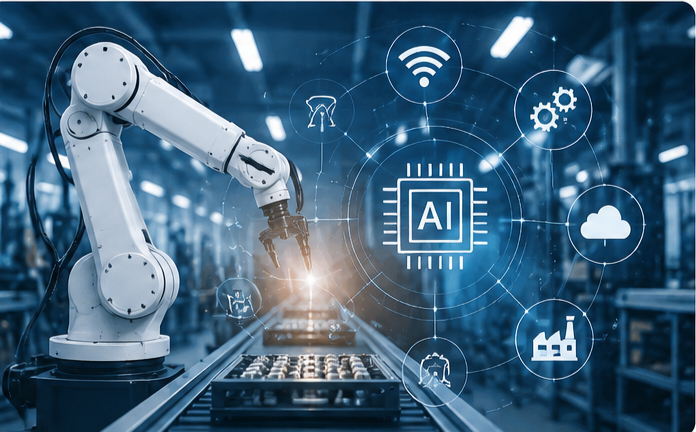
Automation Technology has become one of the most significant innovations of the modern era. It is changing the way businesses operate, improving efficiency, reducing costs, and enhancing productivity across industries. From manufacturing plants and healthcare facilities to banking systems and smart homes, automation is revolutionizing everyday processes.
Automation technology refers to the use of machines, software, robotics, and intelligent systems to perform tasks with minimal human intervention. As organizations continue to embrace digital transformation, automation is becoming a critical tool for achieving operational excellence and maintaining a competitive advantage.
What Is Automation Technology?
Automation Technology is the application of control systems, computers, robotics, and information technologies to manage industrial processes and reduce human involvement. It allows businesses to automate repetitive and time-consuming tasks while maintaining accuracy and consistency.
Together, these technologies create intelligent systems capable of making decisions, monitoring operations, and optimizing workflows in real time.
Benefits of Automation Technology
1. Increased Efficiency
Automation eliminates manual and repetitive tasks, allowing processes to be completed faster and more accurately. Machines can operate continuously without fatigue, significantly improving productivity.
2. Cost Reduction
Organizations can reduce labor costs and operational expenses by automating routine activities. Automated systems also help minimize waste and improve resource utilization.
3. Improved Accuracy
Human errors can lead to costly mistakes. Automated systems perform tasks with high precision, ensuring consistent quality and reliable results.
4. Enhanced Safety
Automation reduces the need for workers to perform dangerous tasks in hazardous environments. Industrial robots can handle heavy machinery, toxic substances, and extreme conditions safely.
5. Better Customer Experience
Businesses can use automation to provide faster responses, personalized services, and efficient support through chatbots, automated workflows, and self-service platforms.
Applications of Automation Technology
Manufacturing Industry
Manufacturing is one of the largest adopters of automation technology. Robotic arms assemble products, inspect quality, and package goods with remarkable speed and precision.
Benefits include:
Faster production cycles
Reduced defects
Improved workplace safety
Higher product quality
Healthcare Sector
Healthcare organizations use automation to streamline administrative tasks, patient monitoring, and medical diagnostics.
Examples include:
Automated appointment scheduling
AI-powered medical imaging
Electronic health records
Robotic-assisted surgeries
These technologies improve patient outcomes and reduce administrative burdens on healthcare professionals.
Banking and Finance
Financial institutions leverage automation to enhance security and efficiency.
Applications include:
Fraud detection systems
Automated loan processing
Customer service chatbots
Algorithmic trading
Automation helps banks deliver faster and more reliable services to customers.
Logistics and Supply Chain
Automation is transforming logistics operations through:
Warehouse robotics
Inventory management systems
Route optimization software
Automated packaging solutions
These innovations help companies reduce delivery times and improve supply chain visibility.
Retail Industry
Retailers use automation for inventory tracking, customer engagement, and order fulfillment.
Examples include:
Self-checkout systems
Personalized product recommendations
Automated stock management
Smart shopping experiences
Automation Technology and Artificial Intelligence
Artificial Intelligence has significantly enhanced automation capabilities. Traditional automation follows predefined rules, while AI-powered automation can learn, adapt, and improve over time.
AI enables systems to:
Analyze large datasets
Predict future outcomes
Identify patterns
Make intelligent decisions
This combination creates what is known as Intelligent Automation, which is transforming industries worldwide.
The Role of Robotics in Automation
Robotics plays a crucial role in automation technology. Modern robots are capable of performing complex tasks with exceptional speed and precision.
Common robotic applications include:
Product assembly
Welding
Packaging
Quality inspection
Material handling
Collaborative robots, or “cobots,” work alongside humans, improving productivity while maintaining workplace safety.
Challenges of Automation Technology
Despite its many benefits, automation technology also presents challenges.
High Initial Investment
Implementing automation systems often requires significant upfront costs for equipment, software, and training.
Workforce Adaptation
As automation replaces repetitive jobs, employees need new skills to work alongside advanced technologies.
Cybersecurity Risks
Connected automation systems can become targets for cyberattacks. Organizations must invest in robust security measures.
System Maintenance
Automated systems require regular updates and maintenance to ensure optimal performance and reliability.
Future Trends in Automation Technology
The future of automation technology is exciting and full of opportunities. Several emerging trends are shaping the next generation of automation.
Artificial Intelligence Integration
AI will continue to enhance automation systems, enabling smarter decision-making and predictive capabilities.
Internet of Things (IoT)
Connected devices will provide real-time data, improving efficiency and enabling automated responses.
Hyperautomation
Organizations are increasingly adopting hyperautomation, which combines AI, machine learning, and robotic process automation to automate end-to-end business processes.
Smart Factories
Manufacturing facilities are evolving into smart factories where machines communicate and coordinate production activities autonomously.
Autonomous Vehicles
Self-driving vehicles and automated transportation systems are expected to revolutionize logistics and mobility.
Why Businesses Should Invest in Automation Technology
Companies that invest in automation technology gain several competitive advantages:
Increased operational efficiency
Reduced costs
Enhanced customer satisfaction
Improved scalability
Better decision-making
Higher profitability
As markets become more competitive, automation is no longer optional but essential for long-term success.
Conclusion
Automation Technology is transforming the modern world by making processes faster, smarter, and more efficient. From manufacturing and healthcare to banking and retail, automation is driving innovation and helping organizations achieve higher levels of productivity and performance. While challenges such as implementation costs and workforce adaptation remain, the benefits far outweigh the drawbacks.